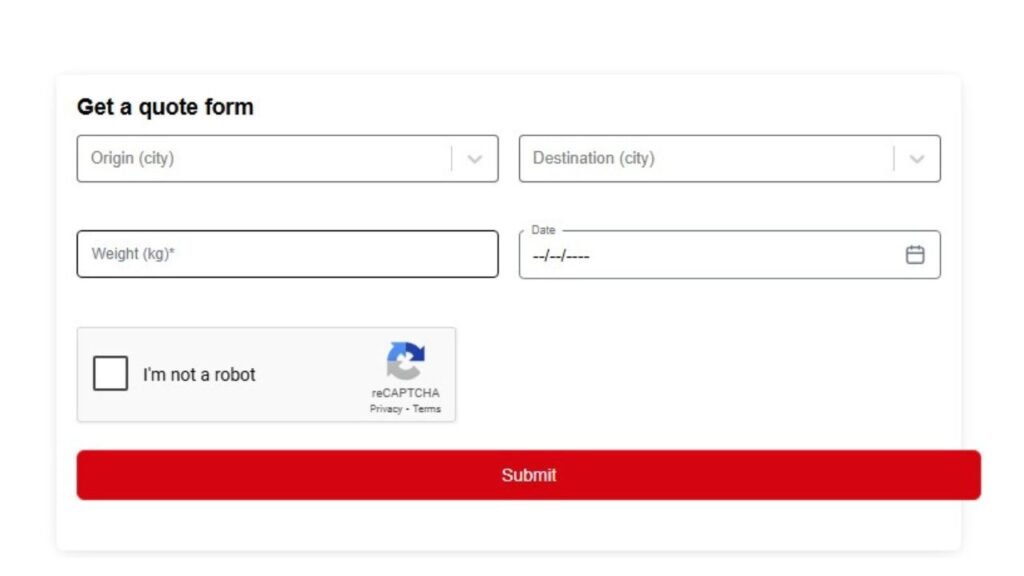

Ever stared at a pile of items ready to ship, only to be hit with a wave of uncertainty about the final cost? You’re not alone. In today’s fast-paced world of e-commerce and global connectivity, calculating courier charges can feel like deciphering a complex code. This is where the TCS Rate Calculator becomes your indispensable ally. TCS, or TCS Courier, is a powerhouse in Pakistan’s logistics landscape, renowned for its extensive network and reliable service. But to truly harness its potential and manage your shipping budget effectively, you need to master the art of predicting costs before you send a single parcel. This comprehensive guide is designed to be your ultimate resource. We will demystify the TCS Rate Calculator, showing you not just how to use it, but how to leverage it to make smarter, more cost-effective shipping decisions. You’ll learn the factors that influence pricing, discover pro tips for saving money, and gain the confidence to ship anything, anywhere, with complete financial clarity.
What is TCS Courier?
Before we dive into the mechanics of the TCS Rate Calculator, it’s crucial to understand the company behind the tool. TCS Courier isn’t just another logistics provider; it’s an institution in Pakistan, with a history spanning over three decades. Founded in 1983, TCS has grown from a humble courier service into a comprehensive supply chain and enterprise solutions provider. Its iconic red and white vans are a familiar sight across the country, symbolizing trust and efficiency.
A Brief History and Market Presence
TCS started with a simple mission: to provide reliable courier services within Pakistan. Over the years, it has expanded its footprint dramatically. Today, it boasts one of the largest private networks in the region, with over 600 locations nationwide. But its reach doesn’t stop at the border. TCS has a significant international presence, offering services to key global destinations, making it a preferred choice for both domestic and international shipping. This extensive network is a primary reason why the TCS courier charges list is so frequently searched—businesses and individuals rely on their widespread delivery capabilities.
Core Services Offered by TCS
TCS is much more than a parcel delivery service. Its portfolio is diverse, catering to a wide range of customer needs. Understanding these services helps contextualize why the shipping calculator outputs different rates for different options.
- Domestic Courier Services: This is the bread and butter of TCS, encompassing everything from document exchange to parcel delivery across Pakistan.
- International Courier Services: Connecting Pakistan to the world, this service handles exports and imports with a focus on reliability and customs clearance.
- E-Commerce Solutions: TCS has positioned itself as a key enabler for the digital economy, offering tailored solutions for online businesses, including cash-on-delivery (COD).
- Freight and Cargo: For larger shipments, TCS provides air and sea freight options.
- Hazir Express: A same-day delivery service within major cities, addressing the need for speed in urban centers.
This diverse service range means that a one-size-fits-all pricing model doesn’t work. The TCS Rate Calculator is therefore essential for getting a precise quote based on the specific service you select.
Why You Need a TCS Rate Calculator
In the realm of logistics, guesswork is your enemy. Relying on rough estimates or outdated TCS courier rates can lead to budget overruns, frustrated customers, and operational inefficiencies. The TCS shipping calculator is designed to eliminate this uncertainty. It’s a strategic tool for anyone who ships regularly, from small business owners to individuals sending gifts to family.
Budgeting and Cost Control
For businesses, especially small and medium-sized enterprises (SMEs) and e-commerce store owners, shipping is a significant operational cost. An accurate TCS parcel cost calculation allows you to:
- Price Your Products Correctly: If you offer free or flat-rate shipping, you need to know your exact costs to maintain profitability.
- Avoid Surprise Charges: The calculator provides a transparent view of the final cost, preventing unpleasant surprises when you drop off your parcel.
- Plan Your Finances: With precise shipping costs, you can create more accurate budgets and financial forecasts.
Comparing Service Options
Not every parcel needs to be delivered overnight. The TCS courier charges online tool lets you compare the cost differential between standard delivery, express services, and economy options. This empowers you to choose the most cost-effective service that still meets your delivery timeline. For instance, a non-urgent document can be sent via a slower, cheaper service, freeing up budget for parcels that require expedited shipping.
Enhancing Customer Experience
Transparency builds trust. By using the TCS Rate Calculator, you can provide your customers with accurate shipping costs at checkout. This reduces cart abandonment and builds a reputation for honesty. Furthermore, you can set realistic delivery expectations, which is a cornerstone of good customer service.
Operational Efficiency
Knowing the exact cost and documentation required for a shipment before you create it saves valuable time at the TCS counter. It streamlines the entire process, from packaging to dispatch, making your shipping workflow lean and efficient.

How to Use the TCS Rate Calculator: Amazing Technique
Using the TCS shipping calculator is a straightforward process, but knowing the nuances can help you get the most accurate quote possible. Let’s walk through the steps you would typically follow on the TCS website or mobile app.
Step 1: Access the Official Calculator
The first and most critical step is to ensure you are using the official tool. Always navigate to the official TCS website (e.g., tcs.com.pk) and look for the “Rate Calculator,” “Calculate Freight,” or similar section. Using the official source guarantees that you are seeing the most current and accurate TCS courier rates.
Step 2: Select the Service Type
Your first choice will be to define the nature of your shipment. The TCS parcel cost calculation will vary significantly based on this selection.
- Domestic: For parcels within Pakistan.
- International: For parcels being sent out of Pakistan.
Step 3: Enter Origin and Destination Details
This is a key determinant of cost. The calculator needs to know where the parcel is coming from and where it’s going.
- For Domestic Shipments: You will typically select the origin city and the destination city from dropdown menus.
- For International Shipments: You will select Pakistan as the origin country and then choose the destination country.
Pro Tip: “Zone-based pricing” is a fundamental concept in courier services. TCS categorizes destinations into zones based on distance and accessibility. A delivery from Karachi to Lahore (a major city) will be in a different zone—and have a different rate—than a delivery from Karachi to a remote village. The calculator automatically factors this in.
Step 4: Provide Package Specifications
This is where the physical attributes of your parcel come into play. Accuracy is paramount here.
- Weight: This is the most critical factor. Enter the weight in kilograms (kg). Remember, couriers use “volumetric weight” or “dimensional weight” for lightweight but bulky items, which we will discuss in detail later.
- Dimensions: Input the length, width, and height of your package in centimeters (cm). This is used to calculate the volumetric weight.
- Number of Pieces: If you are shipping multiple boxes as a single shipment, specify the quantity.
Step 5: Review the Calculated Charges
Once you submit the information, the TCS Rate Calculator will instantly display a breakdown of the charges. This quote typically includes the base freight cost and any applicable taxes. This final figure is your reliable TCS courier charges online quote, giving you the confidence to proceed with your shipment.
Key Factors Influencing TCS Courier Charges
The quote generated by the TCS shipping calculator isn’t a random number. It’s the result of a sophisticated algorithm that considers several variables. Understanding these factors empowers you to influence the final cost.
1. Shipment Weight and Volumetric Weight
This is the cornerstone of courier pricing. TCS, like most major couriers, charges based on the “chargeable weight,” which is the greater of the actual weight or the volumetric weight.
- Actual Weight: The physical weight of your package when placed on a scale.
- Volumetric Weight: Also known as dimensional weight, this is a calculated value that represents the density of a package. Courier planes and vans have limited space, so a large, lightweight box takes up space that could be used for heavier, denser packages. The formula for volumetric weight is:
(Length x Width x Height in cm) / Volumetric Factor
The volumetric factor is a number set by the courier (e.g., 5000 for domestic shipments in some regions). The TCS parcel cost calculation will always perform this comparison behind the scenes.
Example: You’re shipping a box of feathers weighing 2 kg, with dimensions of 50x50x50 cm.
- Actual Weight: 2 kg
- Volumetric Weight: (50 * 50 * 50) / 5000 = 125,000 / 5000 = 25 kg
In this case, the chargeable weight would be 25 kg, making it a much more expensive shipment than the physical weight suggests.
2. Delivery Destination (Zones)
As mentioned earlier, distance matters. TCS divides its service area into zones.
- Local: Within the same city.
- Regional: To nearby cities or regions.
- National: To major cities across the country.
- Remote Areas: Deliveries to far-flung or difficult-to-access locations incur surcharges.
International shipments are also zoned based on continents and countries. Shipping to the UK will have a different TCS courier charges list entry than shipping to the USA or the UAE.
3. Type of Service Selected
The speed of delivery directly impacts the price.
- Standard/Express: The default and usually most cost-effective option for non-urgent deliveries.
- Overnight/Next Flight Out (NFO): Premium services for time-sensitive documents and parcels, commanding a significantly higher price.
- Same-Day (Hazir): The most expensive option for immediate, within-city delivery.
4. Nature of Contents and Value
What you are shipping can also affect the cost.
- Documents vs. Non-Documents: Documents (envelopes with papers) are generally cheaper to ship than non-documents (parcels).
- Dangerous Goods/Hazardous Materials: Items like batteries, perfumes, or flammable liquids require special handling and incur hefty surcharges.
- High-Value Items: Shipments with a declared value above a certain threshold may require additional insurance, which adds to the cost.
5. Additional Surcharges and Fees
The base freight is just one part of the total cost. The TCS Rate Calculator should account for these, but it’s good to be aware of them:
- Fuel Surcharge: A fluctuating percentage added to cover volatile fuel costs.
- Remote Area Surcharge: An extra fee for deliveries to designated remote locations.
- Cash-on-Delivery (COD) Fee: A percentage of the collection amount if you are using TCS’s COD service.
- Customs Duties and Taxes: For international shipments, these are levied by the destination country and are typically the responsibility of the receiver, but you need to be aware of them.
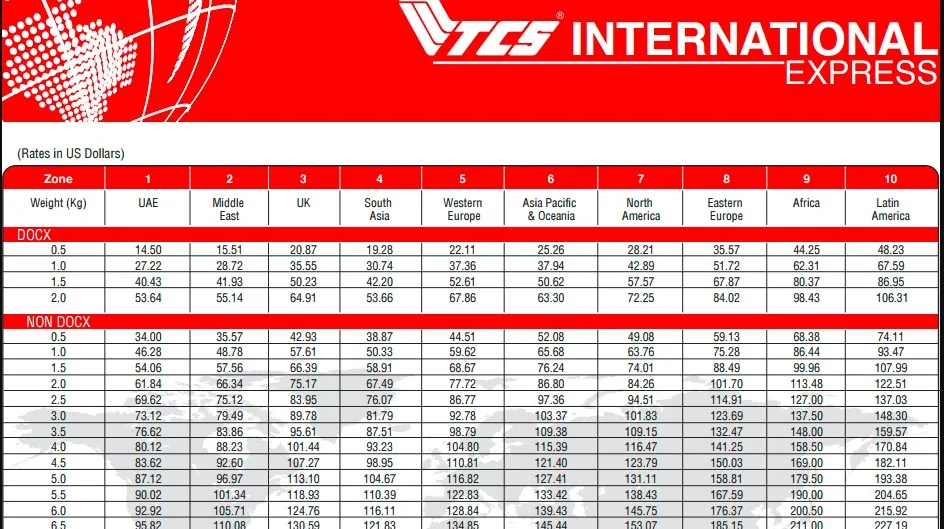
Understanding the TCS Courier Charges List and Volumetric Weight
To truly master the TCS Rate Calculator, you need a deeper understanding of its two most critical inputs: the rate list and the volumetric weight concept.
Deciphering the TCS Courier Charges List
While the online calculator is the most accurate tool, having a conceptual understanding of the rate table structure is helpful. These lists are often structured as a grid.
Sample Domestic Rate Table (Conceptual):
| Weight (kg) | Zone A (Local) | Zone B (Regional) | Zone C (National) | Zone D (Remote) |
|---|---|---|---|---|
| 0.5 | PKR 150 | PKR 220 | PKR 300 | PKR 450 |
| 1.0 | PKR 180 | PKR 260 | PKR 350 | PKR 520 |
| 1.5 | PKR 210 | PKR 300 | PKR 400 | PKR 590 |
| +0.5 kg | +PKR 30 | +PKR 40 | +PKR 50 | +PKR 70 |
This simplified table shows how rates escalate with both weight and distance. The TCS courier charges list for international shipments is more complex, often broken down by country and service type.
Mastering Volumetric Weight for Cost Savings
Volumetric weight is the single biggest reason for discrepancies between expected and actual shipping costs. Here’s how you can use this knowledge to your advantage:
- Choose the Right Box: Don’t use an excessively large box for a small item. The extra packaging material increases the dimensional size and, consequently, the cost.
- Compress When Possible: For soft items like clothes, use vacuum bags to reduce volume before boxing them.
- Understand the “Dead Volume”: Fill empty spaces within the box with packing peanuts or bubble wrap to prevent the box from being crushed, but be mindful that this doesn’t dramatically increase the external dimensions.
By optimizing your packaging, you can ensure that the chargeable weight is as close to the actual weight as possible, leading to significant savings, especially for lightweight, bulky products.
TCS Rate Calculator for International Shipping
Using the TCS international shipping calculator involves a few more considerations than domestic shipping. The process of calculating costs is similar, but the variables are more complex.
Key Differences in International Calculations
- Customs Declarations: The calculator’s quote is for freight and TCS fees. It does not include duties and taxes, which are determined by the customs authorities of the destination country. However, a good calculator might provide an estimate or a link to a customs duty calculator.
- Prohibited and Restricted Items: The list of items you cannot ship internationally is much longer and stricter. Attempting to calculate a rate for a prohibited item is futile, as the shipment will be rejected. Always check the latest list on the TCS website.
- Currency and Payment: Quotes may be available in both Pakistani Rupees and foreign currencies like US Dollars or Euros, depending on the service.
Documentation Requirements
While not a direct input into the TCS Rate Calculator, being prepared with the correct documentation is part of the international shipping process. This typically includes:
- Commercial Invoice
- Packing List
- Certificate of Origin (if applicable)
- Any specific permits for restricted goods
Pro Tips for Reducing Your Courier Costs with the TCS Calculator
The TCS shipping calculator isn’t just a quoting tool; it’s a strategic device for cost optimization. Here are actionable tips to get the best rates.
1. Optimize Your Packaging
As discussed, packaging is everything. Before you even open the calculator, pack your item as efficiently as possible. Measure and weigh the packed box to get the most accurate inputs for your TCS parcel cost calculation.
2. Compare Service Levels Systematically
Use the calculator to run multiple scenarios.
- Scenario A: Standard Service, 2-day delivery.
- Scenario B: Express Service, 1-day delivery.
If the cost difference is minimal, but the time saving is significant, Express might be worth it. If the difference is large and the urgency is low, Standard is the clear winner.
3. Consolidate Multiple Shipments
If you have several items going to the same address, see if you can ship them in one larger box instead of multiple small ones. Shipping one 5kg box is almost always cheaper than shipping five 1kg boxes to the same location due to the way weight brackets work.
4. Leverage Business Accounts and Contracts
If you are a business with a high shipping volume, don’t rely solely on the standard retail rates from the calculator. Contact TCS directly to negotiate a corporate contract with discounted rates. The calculator is for standard pricing; dedicated account managers can offer much better deals.
5. Ship Off-Peak
While not always a option with TCS’s standard pricing, some couriers offer lower rates for less time-sensitive deliveries. If your shipment isn’t urgent, inquire about economy services.
Common Issues and Troubleshooting with the TCS Rate Calculator
Even the best tools can sometimes be confusing. Here are solutions to common problems users face.
“The calculator is not loading or showing an error.”
- Solution: Refresh the page, clear your browser cache, or try a different browser. Ensure you have a stable internet connection. If the problem persists, the tool might be under maintenance—try again later.
“The calculated rate seems too high.”
- Solution: Double-check your inputs. The most common causes are:
- Incorrect Weight: You may have entered pounds (lbs) instead of kilograms (kg).
- Volumetric Weight Trap: Your package is lightweight but large. Re-measure your box and re-calculate the volumetric weight manually to verify.
- Remote Area Surcharge: The destination may be classified as a remote area. The calculator includes this surcharge automatically.
- Service Selection: You might have accidentally selected a premium (Overnight) service instead of Standard.
“I can’t find my specific city/town in the dropdown.”
- Solution: Try entering the nearest major city. The TCS network delivers to a vast number of locations, but the calculator’s list might be simplified. If you are unsure, call TCS customer service with the exact address for a manual quote.
“The international rate doesn’t include customs charges.”
- Solution: This is normal. The TCS international shipping calculator provides the freight cost. To estimate customs duties, you will need to research the import regulations and tax structures of the destination country. TCS can often guide you on the process but cannot give a definitive amount as it is levied by a foreign government.
TCS Rate Calculator for E-commerce Businesses
For online sellers, the TCS Rate Calculator is not a convenience; it’s a critical component of the sales engine. Integrating accurate, real-time shipping costs into your online store is non-negotiable for success.
Integrating Real-Time Rates into Your Store
Modern e-commerce platforms (like Shopify, WooCommerce, Magento) allow for integration with shipping carriers via APIs (Application Programming Interfaces). This means that at checkout, your store can communicate directly with TCS’s systems to fetch a live shipping quote based on the customer’s cart weight, dimensions, and delivery address. This is far superior to offering flat rates, which can either eat into your profits or deter customers with high shipping costs.
Managing Cash-on-Delivery (COD) Efficiently
COD is hugely popular in markets like Pakistan, but it comes with complexities. The TCS shipping calculator will show you the COD fee, which is usually a percentage of the collection amount. Factor this fee into your product pricing or consider offering a small discount for pre-paid orders to incentivize customers away from COD, thereby reducing your own fees and improving cash flow.
Streamlining Bulk Shipping
For businesses processing dozens of orders a day, using the public-facing calculator for each one is inefficient. TCS offers enterprise-level solutions and software (like TCS VMS) that allow for bulk rate calculations, label printing, and shipment tracking from a single dashboard.
The Future of Shipping Calculation: Beyond the Basic Tool
The technology behind tools like the TCS Rate Calculator is continuously evolving. The future points towards more intelligent, integrated, and predictive systems.
AI-Powered Predictive Analytics
Future calculators may use AI to analyze your shipping history and suggest the most cost-effective service for a new shipment based on past patterns. They could also predict potential delays and suggest alternative routes or carriers.
Deeper E-commerce Platform Integration
The line between the shopping cart and the courier’s system will blur even further. We will see more seamless integrations where shipping options, costs, and delivery timelines are presented to the customer with even greater accuracy and clarity.
Dynamic Pricing and Real-Time Optimization
Inspired by ride-sharing apps, we might see more dynamic pricing models where shipping costs fluctuate slightly based on real-time demand, network capacity, and fuel prices. The calculator would then not just be a tool but a live marketplace for logistics.
Empowering Your Shipping Decisions
Navigating the world of courier charges no longer has to be a daunting task filled with uncertainty. The TCS Rate Calculator is a powerful, user-friendly tool that puts you in control of your shipping logistics. By understanding the factors that influence cost—from volumetric weight and delivery zones to service types and surcharges—you can move from guessing to knowing.
You now have the knowledge to use the calculator not just as a simple quote generator, but as a strategic instrument for budgeting, comparing services, and ultimately, reducing your overall shipping expenses. Whether you’re a once-in-a-while shipper or a growing e-commerce business, mastering this tool is a step towards smarter, more efficient, and more cost-effective operations. So, the next time you have a parcel to send, let the TCS Rate Calculator do the hard work for you. Your budget—and your peace of mind—will thank you for it.
TCS Shipment Rate Calculator Step-by-Step Guide in Pakistan
TCS Tracking Complete Guide to TCS Tracking ID and Parcel Updates